The Next Leap in Application Security: How AI is Moving WAFs from Anomaly Detection to Proactive Threat Verification
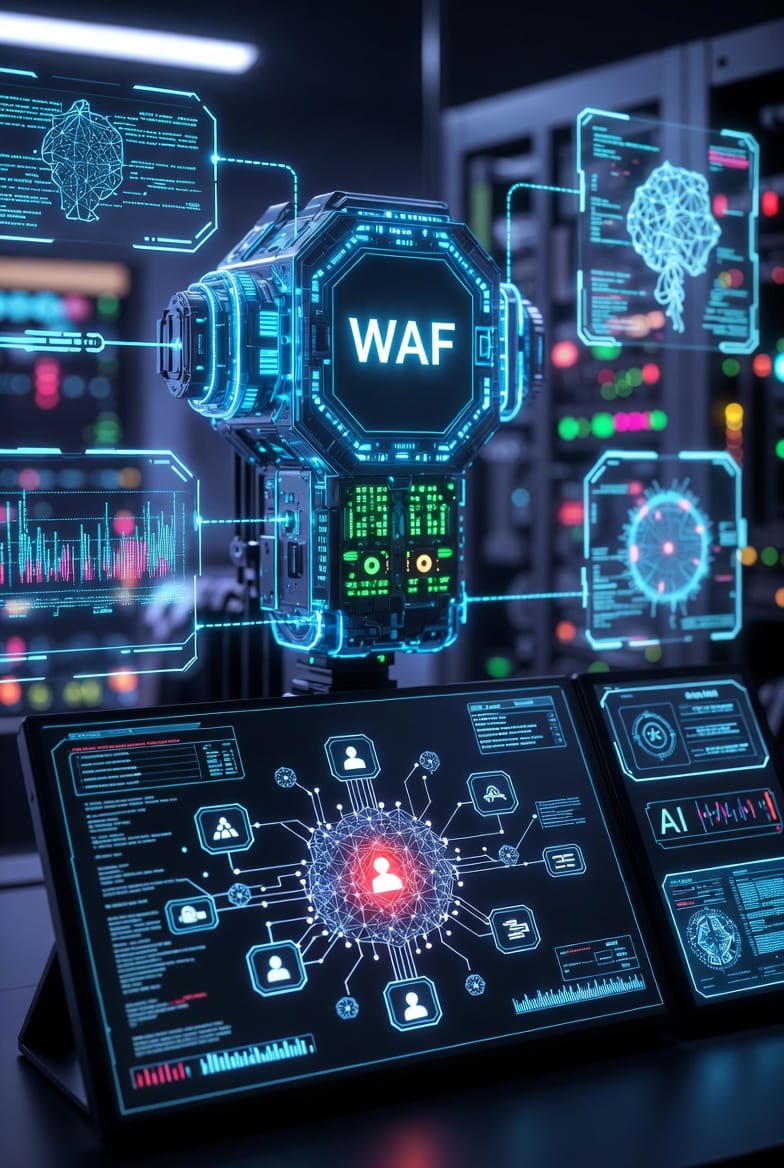
For years, the Web Application Firewall (WAF) has been the digital bouncer for our applications. Its primary job was straightforward: check incoming traffic against a list of known threats (signatures) and block the bad guys. Then came the evolution to anomaly detection, where WAFs learned to spot behavior that deviated from the norm. While this was a significant step forward, it still operated on a reactive principle—flagging what seemed unusual and leaving security teams to investigate the noise.
But the landscape of 2024 and beyond demands a more intelligent, proactive approach. The next great evolution in application security isn't just about detecting anomalies; it's about proactive threat verification. Powered by contextual AI, modern Web Application and API Protection (WAAP) platforms are no longer just asking, "Does this look weird?" They are now capable of answering a much more important question: "Is this request genuinely legitimate for this specific user, in this context, targeting this specific API endpoint?"
This shift from suspicion to verification is fundamentally changing how we defend our most critical assets.
Beyond the Baseline: The Limits of Anomaly Detection
Anomaly detection was a game-changer, but it has its limitations in the face of sophisticated threats:
- The False Positive Fatigue: A sudden spike in traffic from a new marketing campaign or a developer running a load test can trigger a flood of alerts. Security teams spend valuable time chasing ghosts, leading to alert fatigue and a higher chance of missing a real threat.
- The "Low-and-Slow" Attack Blind Spot: Advanced attackers don't always create noisy anomalies. They mimic legitimate user behavior over extended periods, making subtle, malicious API calls that are individually too small to trigger a baseline deviation.
- Lack of Business Context: Anomaly detection knows what "normal" traffic volume looks like, but it doesn't understand the business logic. It doesn't know that a regular user account should never have access to the
/admin/delete-allendpoint, even if the request itself isn't malformed.
The New Paradigm: AI-Powered Threat Verification
Proactive threat verification moves beyond patterns to intent. Instead of just identifying deviations, AI models are now being trained to build a multi-dimensional profile of legitimate interactions. This "positive security model" is built on a rich understanding of context, combining multiple data points to verify a request's authenticity in real-time.
1. It Starts with API Schema Enforcement and Learning
A modern WAF must first understand the language of your APIs. By ingesting an OpenAPI (Swagger) schema, the WAF knows exactly what a valid request to each endpoint should look like—the expected data types, formats, and constraints. But AI takes this a step further. By observing live traffic, it learns the typical sequences of API calls. For example, it learns that a user almost always calls /get-cart-contents before /checkout. A session that jumps straight to checkout with a high-value order could be flagged for verification, even if both individual calls are technically valid.
2. Contextual AI: Fusing User Behavior and Identity
This is where threat verification truly shines. The AI model doesn’t just see an IP address; it sees a story. It fuses multiple contexts to build a high-fidelity "trust score" for every single request:
- Identity Context: Is this user authenticated? Have they passed MFA? What are their roles and permissions according to the identity provider? A request to a sensitive endpoint from a user without a recent MFA validation is immediately suspicious.
- Behavioral Context: What is this user's typical behavior? Do they usually log in from this country? Do they typically access this set of APIs? A user who has only ever accessed customer data suddenly attempting to query financial records is a major red flag.
- API Context: How does this request fit into the business logic? Is this API call exposing more data than is typical (e.g., a BOLA attempt)? Is it trying to manipulate undocumented parameters?
3. Intelligent Bot Management: Distinguishing Good Bots from Bad
Not all automation is malicious. Search engine crawlers, monitoring tools, and partner integrations are all essential "good bots." An AI-powered WAF is trained to distinguish between them. It uses techniques like fingerprinting, behavioral analysis, and cryptographic challenges to identify sophisticated malicious bots that are designed to mimic human behavior, stopping credential stuffing, inventory hoarding, and scraping attacks before they can impact the application.
From Blocking to Adaptive Response
The outcome of threat verification isn't always a simple "block." Because the system has a higher degree of confidence, it can apply more nuanced, adaptive responses:
- Challenge: If a request is moderately suspicious, the system can automatically challenge the user with a CAPTCHA or trigger a step-up MFA authentication.
- Rate-Limit: For behavior that looks like aggressive but potentially legitimate usage, the user can be temporarily rate-limited.
- Log and Deceive: In high-security environments, a highly suspicious actor can be routed to a "honeypot" environment, allowing security teams to observe their methods safely.
Conclusion: The WAF as a Smart Co-Pilot
The evolution of the WAF is a story of increasing intelligence. We've moved from a simple bouncer with a list of troublemakers to a sophisticated security co-pilot that understands your application's logic and the intent of its users. By shifting our mindset from detecting anomalies to proactively verifying legitimacy, we are building a more resilient, context-aware defense. In the modern threat landscape, security can no longer afford to be reactive. The future belongs to systems that can think, verify, and adapt in real-time.