Beyond the Handshake

Beyond the Handshake: Securing Full-Stack Architectures with Context-Aware WAF Automation
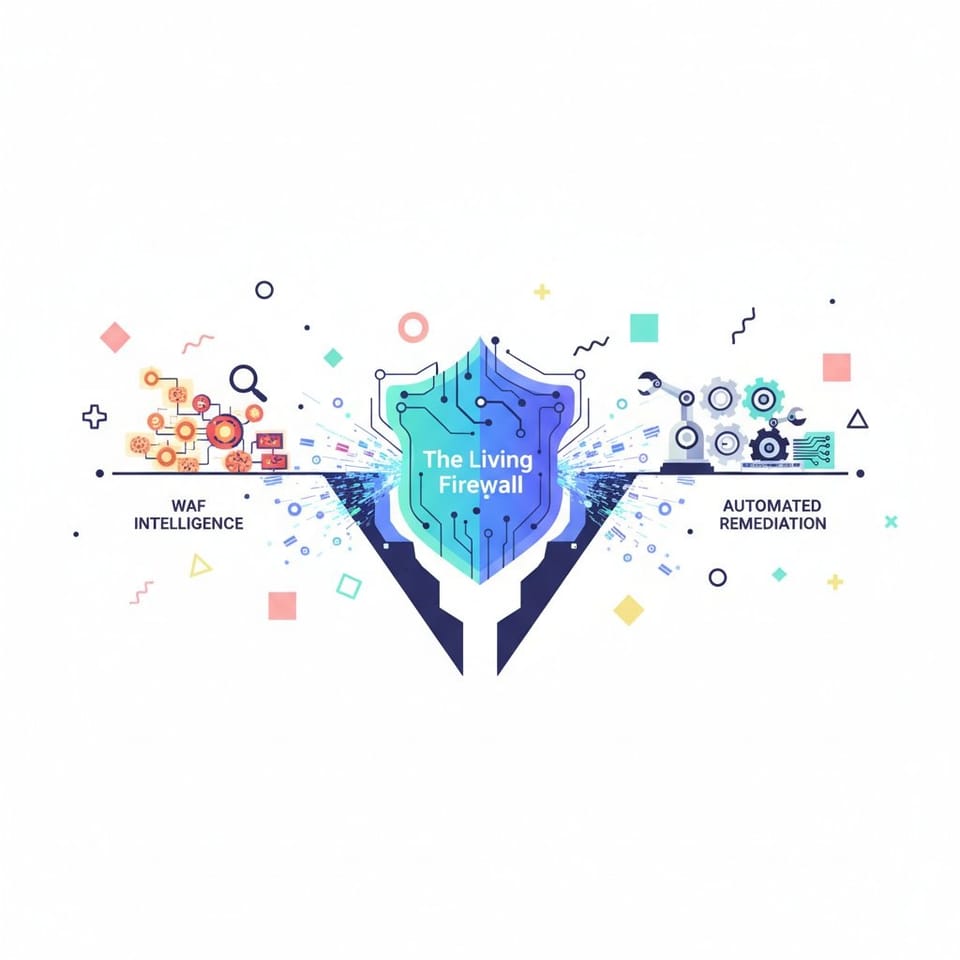
As modern web applications evolve into complex ecosystems of decoupled front-ends and microservice-driven back-ends, the traditional "set-and-forget" firewall approach has become obsolete. Security is no longer a perimeter concern but an intrinsic layer of the development lifecycle. While Web Application Firewalls (WAFs) have long served as the first line of defense, the rise of sophisticated automated attacks requires a shift toward context-aware security. This means moving beyond static signature matching and integrating real-time intelligence directly into the CI/CD pipeline, ensuring that every front-end request is validated against the dynamic state of the back-end environment.
Dynamic Defense: Integrating Contextual Intelligence into the WAF
Modern application safety relies on the synergy between DevOps automation and security enforcement. Context-aware WAF policies go beyond checking for basic SQL injection or Cross-Site Scripting (XSS). They analyze the behavioral patterns of the user, the geographical context, and the specific intent of the API call. By implementing "Security-as-Code," developers can define these security parameters alongside their application logic. This ensures that when a new back-end endpoint is deployed, the WAF is automatically updated with the specific schema validation and rate-limiting rules required to protect that specific resource.
# Example: WAF Security-as-Code Configuration for API Protection
resource "aws_wafv2_web_acl" "api_security_layer" {
  name        = "ContextAware-Guard"
  scope       = "REGIONAL"

  rule {
    name     = "RateLimitByIP"
    priority = 1
    action {
      block {}
    }
    statement {
      rate_based_statement {
        limit              = 1000
        aggregate_key_type = "IP"
        scope_down_statement {
          geo_match_statement {
            country_codes = ["US", "GB", "DE"]
          }
        }
      }
    }
    visibility_config {
      cloudwatch_metrics_enabled = true
      metric_name                = "HighVolumeTraffic"
      sampled_requests_enabled   = true
    }
  }
}
Best Practices for Full-Stack Application Safety
To maintain a resilient security posture, organizations must bridge the gap between front-end accessibility and back-end integrity. Here are the actionable steps for modern teams:
Implement Schema Validation: Ensure your WAF or API Gateway enforces strict JSON/XML schema validation to prevent malformed payloads from reaching the back-end.
Adopt JWT Scrutiny: Move beyond simple token presence. Use your security layer to validate JSON Web Token (JWT) claims, checking for expiration and proper authorization scopes before the request hits the application logic.
Automate Rule Deployment: Integrate security testing into your CI/CD pipeline. Use tools to automatically generate WAF rules based on the OpenAPI/Swagger documentation of your back-end services.
Monitor Behavioral Anomalies: Shift from static blocking to behavioral analysis. Track the "golden signals" of traffic (latency, errors, traffic volume) to identify botnets that mimic human behavior.
Conclusion
The convergence of DevOps and Cyber Security demands a more nuanced approach to application safety. By moving away from static perimeters and embracing context-aware, automated WAF configurations, organizations can defend against modern threats without hindering development velocity. True resilience is found in the "hardened handshake"—a seamless, secure interaction between the front-end user experience and the back-end data layer, governed by intelligent, code-driven security policies.