Defending the Perimeter: Strategic WAF Implementation for Modern Application Security
Defending the Perimeter: Strategic WAF Implementation for Modern Application Security
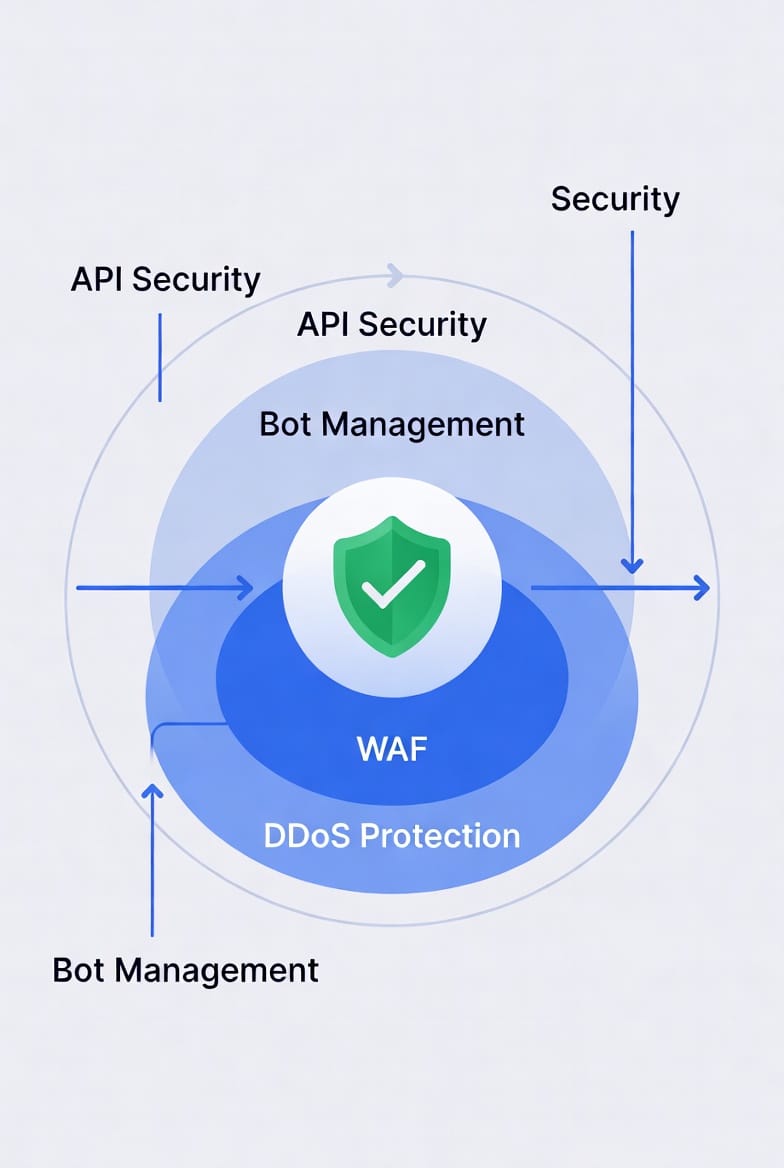
In an era where cyber threats are becoming increasingly sophisticated, relying solely on standard authentication mechanisms is no longer sufficient to protect your digital assets. As modern applications move toward distributed architectures and heavy API reliance, the attack surface expands, leaving back-end services vulnerable to SQL injection, Cross-Site Scripting (XSS), and distributed denial-of-service (DDoS) attacks. A Web Application Firewall (WAF) serves as the critical first line of defense, filtering and monitoring HTTP traffic between a web application and the Internet to ensure that malicious requests are neutralized before they ever reach your core logic.
Key Technical Details of Layer 7 Defense
Unlike traditional firewalls that focus on IP addresses and ports (Layers 3 and 4), a WAF operates at the Application Layer (Layer 7). This allows it to inspect the actual payload of a request, identifying patterns that match known attack signatures or anomalous behavior. For DevOps and Security engineers, implementing a WAF involves configuring rulesets that target the OWASP Top 10 vulnerabilities. By integrating rate limiting and header validation, you can prevent automated bots from scraping your data or overwhelming your server resources. The following example demonstrates a robust Nginx configuration designed to act as a basic WAF by filtering suspicious query strings and implementing rate limiting.
# Define a rate limiting zone to prevent brute force attacks limit_req_zone
limit_req_zone $binary_remote_addr zone=api_limit:10m rate=5r/s;

server {
    listen 443 ssl;
    server_name api.yourservice.com;

    # Apply rate limiting to the login endpoint
    location /api/v1/login {
        limit_req zone=api_limit burst=10 nodelay;
        proxy_pass http://backend_cluster;
    }

    # Block common SQL Injection patterns in the URL
    if ($query_string ~* "union.*select.*\(") {
        return 403;
    }
    if ($query_string ~* "drop.*table") {
        return 403;
    }

    # Block common XSS patterns
    if ($query_string ~* "(<|%3C).*script.*(>|%3E)") {
        return 403;
    }

    location / {
        proxy_pass http://backend_cluster;
        proxy_set_header Host $host;
        proxy_set_header X-Real-IP $remote_addr;
    }
}
Best Practices for Application Safety
Building a secure application environment requires a holistic approach that combines automated tools with rigorous development standards. Here are the essential practices for maintaining a hardened security posture:
Implement Least Privilege: Ensure that your application and its associated database users have only the minimum permissions required to perform their tasks.
Continuous Monitoring and Logging: Use centralized logging solutions to track WAF hits and application errors in real-time. This helps in identifying zero-day exploits as they happen.
Automated Security Scanning: Integrate Dynamic Application Security Testing (DAST) into your CI/CD pipeline to identify vulnerabilities in the running application before code reaches production.
Regular Ruleset Updates: Cyber threats evolve daily. Ensure your WAF rules (such as the OWASP Core Rule Set) are updated regularly to protect against the latest exploits.
Sanitize All Inputs: Never trust client-side data. Use robust server-side libraries to validate and sanitize every piece of data coming from the front-end.
Conclusion
Application safety is not a one-time setup but a continuous process of refinement and vigilance. By deploying a strategically configured WAF and adhering to DevOps security best practices, organizations can significantly reduce their risk profile. While no system is entirely impenetrable, the combination of proactive filtering at the edge and secure coding practices at the core creates a formidable defense against the ever-changing landscape of web-based threats. Investing in these security layers today is the most effective way to ensure the long-term integrity of your data and the trust of your users.