From Perimeter to Pipeline
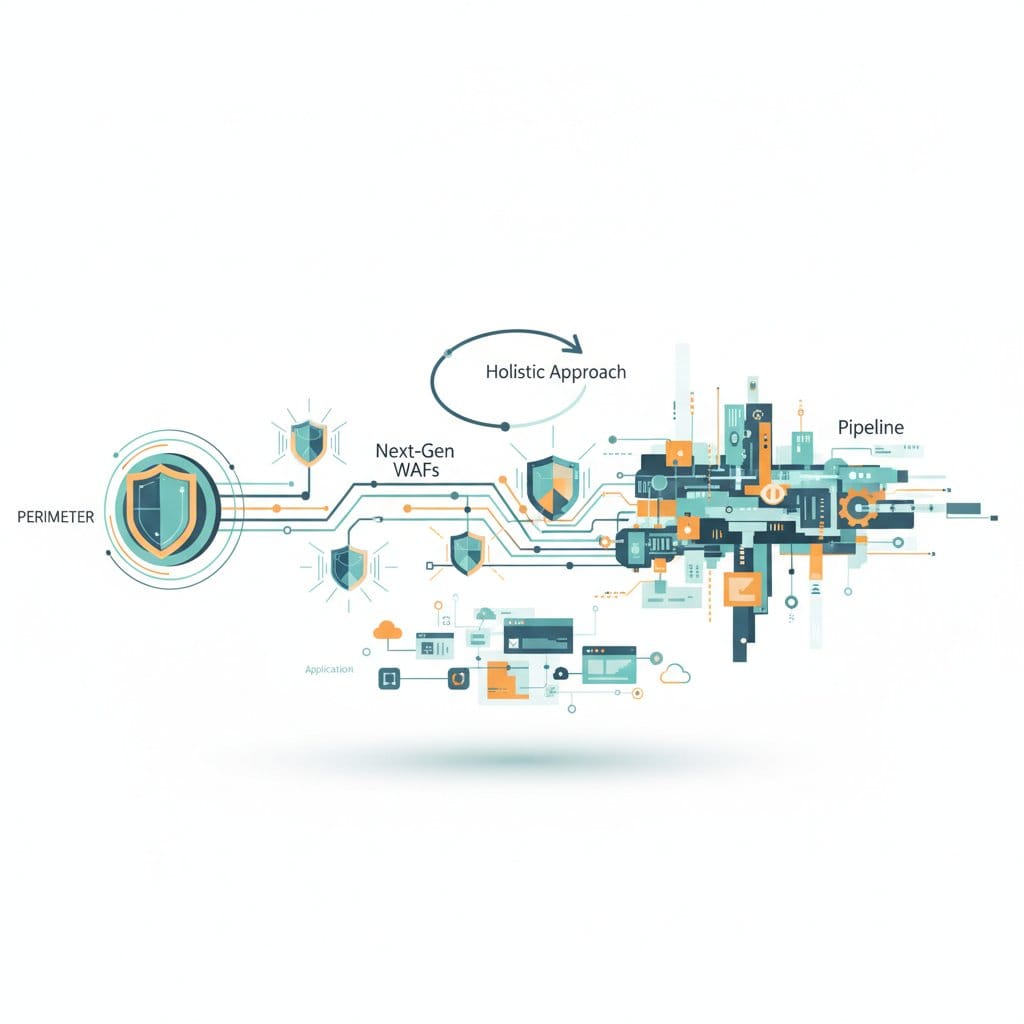
From Perimeter to Pipeline: A Holistic Approach to Application Safety with Next-Gen WAFs
In the rapidly evolving landscape of modern application development, where microservices, APIs, and continuous deployment are the norm, traditional perimeter-based security measures are no longer sufficient. The speed and complexity of today's applications demand a more integrated, proactive, and intelligent approach to application safety. While Web Application Firewalls (WAFs) remain a critical component, their evolution and strategic integration within a broader DevSecOps framework are paramount to building truly resilient applications.
Key Technical Details: Evolving WAFs and Integrated Application Security
The concept of application security has moved "beyond the shield" of a simple perimeter defense. Modern threats exploit vulnerabilities throughout the entire application lifecycle, from code inception to deployment and runtime. This necessitates a multi-layered strategy that combines advanced WAF capabilities with a "shift left" mentality, embedding security into every stage of development.
Next-Generation WAFs (WAAPs): Traditional WAFs primarily relied on signature-based detection and predefined rule sets. Next-gen WAFs, often referred to as Web Application and API Protection (WAAP) solutions, leverage artificial intelligence (AI) and machine learning (ML) for anomaly detection, behavioral analysis, and proactive threat verification. They excel at identifying zero-day exploits, sophisticated bot attacks, and API-specific threats that bypass older systems.
Shifting Left with DevSecOps: The principle of "shifting left" means integrating security practices and tools earlier into the Software Development Life Cycle (SDLC). This includes Static Application Security Testing (SAST), Dynamic Application Security Testing (DAST), Software Composition Analysis (SCA), and Infrastructure as Code (IaC) security scanning within the CI/CD pipeline. The goal is to identify and remediate vulnerabilities before they reach production.
API Security as a Core Pillar: With APIs forming the backbone of modern applications, dedicated API security is non-negotiable. Next-gen WAFs and specialized API security gateways provide granular control, authentication, authorization, and threat protection for API endpoints, defending against common API specific attacks like broken object level authorization (BOLA) and excessive data exposure.
Zero Trust and Contextual Intelligence: Moving beyond the "trust but verify" model, Zero Trust architectures assume breach and verify every request, regardless of its origin. WAFs and application security solutions contribute by incorporating contextual intelligence – understanding user identity, device posture, location, and behavioral patterns – to make more informed access and threat mitigation decisions.
Integrating these elements means moving from a reactive, perimeter-focused defense to a proactive, pipeline-embedded security posture. Here's how a conceptual CI/CD pipeline might integrate security gates:
stages: - build - test - security - deploy
build_and_test: stage: build script: - echo "Building application..." - # build commands - echo "Running unit tests..." - # test commands
security_scan_sast: stage: security script: - echo "Running SAST scan on source code..." - ./sast-tool scan --project-path . --output-format json > sast-results.json - ./policy-engine enforce --report sast-results.json --threshold critical artifacts: paths: - sast-results.json only: - merge_requests - main
security_scan_dast: stage: security script: - echo "Deploying to staging for DAST scan..." - ./deploy-to-staging.sh - echo "Running DAST scan on deployed staging environment..." - ./dast-tool scan --url https://staging.your-app.com --output-format json > dast-results.json - ./policy-engine enforce --report dast-results.json --threshold high artifacts: paths: - dast-results.json only: - main # DAST usually runs on a deployed environment
deploy_to_production: stage: deploy script: - echo "Deploying to production..." - ./deploy-to-production.sh # This stage would only run if all previous security gates pass needs: - security_scan_sast - security_scan_dast only: - main
Best Practices for Comprehensive Application Safety
Achieving robust application safety requires more than just deploying tools; it demands a strategic approach and cultural shift within development and operations teams.
Automate Everything: Integrate SAST, DAST, SCA, and IaC security scanning directly into your CI/CD pipelines. Automate WAF rule deployment and updates where possible.
Prioritize API Security: Treat APIs as first-class citizens in your security strategy. Implement API gateways with strong authentication, authorization, and rate-limiting, complemented by a WAAP for deep L7 inspection.
Embrace Zero Trust Principles: Implement granular access controls, multi-factor authentication, and continuous verification for all users and services, regardless of their location.
Continuous Monitoring and Threat Hunting: Don't just rely on automated blocking. Implement robust logging, security information and event management (SIEM), and security orchestration, automation, and response (SOAR) solutions to continuously monitor for anomalies and actively hunt for emerging threats.
Regular WAF Policy Tuning: Avoid "set it and forget it." Regularly review and tune your WAF policies to minimize false positives, maximize threat detection, and adapt to evolving application logic and threat landscapes.
Foster a Security Culture: Provide developers with security training, secure coding guidelines, and easy-to-use security tools. Empower them to identify and fix vulnerabilities early, making security a shared responsibility.
Conclusion
The journey to application safety in the modern era is continuous and multifaceted. It's no longer about merely "defending the perimeter" with a static WAF, but about embedding security deeply into the development pipeline, leveraging intelligent next-generation WAFs, and adopting a proactive, Zero Trust mindset. By bridging the gap between DevOps and security, organizations can build resilient applications that are not only functional and performant but also inherently secure against the dynamic and sophisticated threats of today.