Shifting Left: Implementing Security-as-Code
Shifting Left: Implementing Security-as-Code to Protect the Modern Application Lifecycle
In the traditional development lifecycle, security was often treated as a final "gate" before deployment—a bottleneck that frequently caused friction between developers and operations teams. As modern stacks transition toward rapid deployment cycles, the industry is moving toward "Security-as-Code." This paradigm integrates security protocols directly into the DevOps pipeline, ensuring that every front-end update or back-end API change is automatically vetted against organizational security standards. By treating security configurations with the same rigor as application code, teams can build resilient, self-defending applications that adapt to threats in real-time.
Key Technical Details: Automating Security Policies
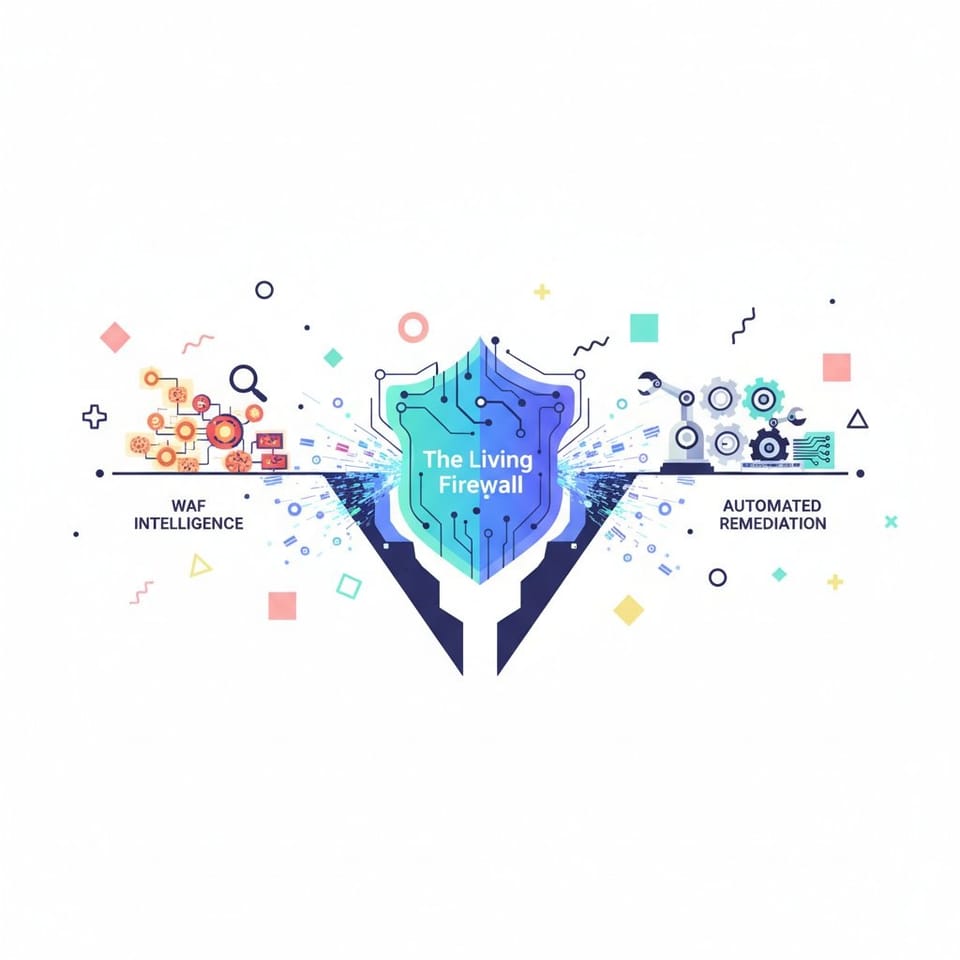
Security-as-Code involves defining security policies, WAF rules, and access controls in machine-readable files (such as YAML or JSON). This allows security teams to version control their infrastructure and automatically deploy Web Application Firewall (WAF) updates alongside application code. For example, instead of manually configuring a WAF to block a new SQL injection pattern, a developer can commit a rule update to a repository, triggering a CI/CD pipeline that validates and applies the rule across production environments.
A common implementation involves using infrastructure-as-code (IaC) tools to define WAF ACLs (Access Control Lists). This ensures that the staging and production environments have identical security postures, preventing the "it worked in dev" security gap. Below is an example of how a WAF rule can be defined as a configuration block to prevent common cross-site scripting (XSS) attacks in a cloud-native environment.
# Example WAF Rule Configuration for XSS Prevention resource: "wafv2_web_acl" name: "DevSecOps-Standard-ACL" rules: - name: "BlockXSS" priority: 1 action: "block" statement: xss_match_statement: field_to_match: all_query_arguments: {} text_transformations: - priority: 0 type: "URL_DECODE" - priority: 1 type: "HTML_ENTITY_DECODE" visibility_config: sampled_requests_enabled: true cloudwatch_metrics_enabled: true metric_name: "BlockXSSMetric"
Best Practices for Application Safety
To successfully integrate security into your DevOps workflow, consider the following actionable strategies:
Automate Static and Dynamic Analysis: Integrate SAST (Static Application Security Testing) and DAST (Dynamic Application Security Testing) tools directly into your CI/CD pipeline to catch vulnerabilities before they reach the artifact stage.
Version Your Security Logic: Treat your WAF rules and IAM policies as code. If a new rule causes a false positive, you can quickly roll back to a previous version using Git history.
Implement Policy-as-Code: Use tools like Open Policy Agent (OPA) to enforce fine-grained authorization policies across your microservices and APIs, ensuring that front-end requests are always verified by back-end logic.
Continuous Monitoring and Feedback: Security-as-code isn't "set it and forget it." Use logging and behavioral analytics to feed data back into your development cycle, allowing for iterative improvements to your security posture.
Conclusion
The convergence of development, operations, and security is no longer an optional luxury—it is a requirement for survival in an increasingly hostile digital landscape. By embracing Security-as-Code, organizations can eliminate the silos that lead to vulnerabilities and slow down innovation. When security is automated, versioned, and integrated, the result is a more robust application that can defend itself against the unknown while maintaining the velocity that modern business demands. It is time to stop viewing security as a barrier and start viewing it as a fundamental component of the code itself.